
Monthly Archives: May 2026

A Major Shift in Kenyan FinTech: Why KCB’s Stake in Pesapal Matters
The recent announcement of KCB Group acquiring a minority stake in Pesapal is far more than just another item on the financial news wire. It’s a strategic, forward-looking move that signals a significant shift in Kenya’s financial landscape. But what does this new partnership really mean for the sector? Here are my three key takeaways: […]

Building an Enterprise-Grade Cloud Architecture for Generative AI Models
Generative AI (GenAI) has fundamentally disrupted how organizations approach artificial intelligence, business solution development, and daily operational workflows. Capable of generating novel content such as text, images, audio, video, code, and sophisticated simulations, GenAI is driving powerful innovations across diverse sectors. Deep learning algorithms and neural networks power these capabilities by recognizing complex patterns in […]

The Experimentation Edge: Driving Digital Product Innovation
In the digital age, the difference between market leaders and those left behind often comes down to one thing: how quickly they can learn. Companies like Apple, Netflix, and Amazon have disrupted entire industries by treating their business plans as sets of hypotheses to be tested rather than fixed blueprints. Redefining the Digital Product To […]

An Investigation of ‘Sponsorship’ among Female University Students in Nairobi
Beyond the Taboo: Understanding “Sponsorship” Among Nairobi’s Students In the bustling streets of Nairobi, the term “Sponsor” has moved beyond corporate funding into a complex social phenomenon. To many, it describes an older, wealthy man who provides financial support to a younger woman—often a university student—in exchange for companionship or sexual favors. But what drives […]
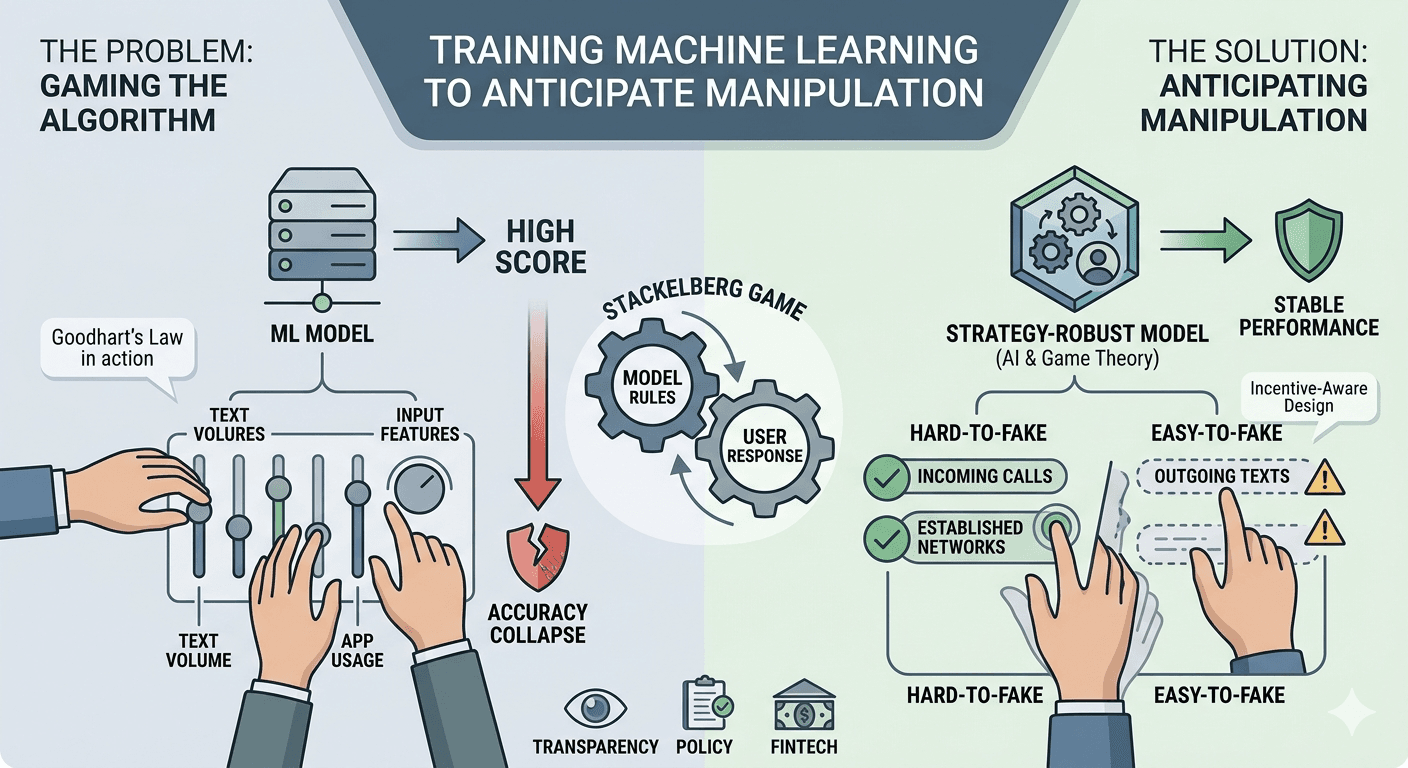
Training Machine Learning to Anticipate Manipulation
The paper “Training Machine Learning to Anticipate Manipulation” (Blumenstock et al., 2023) addresses a fundamental flaw in standard machine learning: the assumption that data distributions remain stable when models are deployed. In reality, when algorithms make consequential decisions—such as awarding loans or granting parole—individuals have strong incentives to “game” the system by strategically altering their […]
